


The Allure of French Country Exteriors: Embracing Rustic Elegance
This post may contain affiliate links. Please see my disclosure policy for details.
Picture yourself walking down a quiet dirt path in the South of France. The air smells faintly of wild thyme and crushed lavender. Up ahead, nestled behind a low stone wall, sits a house that looks as though it grew straight out of the earth. This is the magic of the French country house.
These homes masterfully blend rustic simplicity with an undeniable, effortless elegance. They do not shout for attention. Instead, they draw you in with warm textures, soft colors, and a deep connection to the surrounding landscape.
If you want to bring a touch of European romance to your own home design, understanding the anatomy of these exteriors is the perfect place to start.
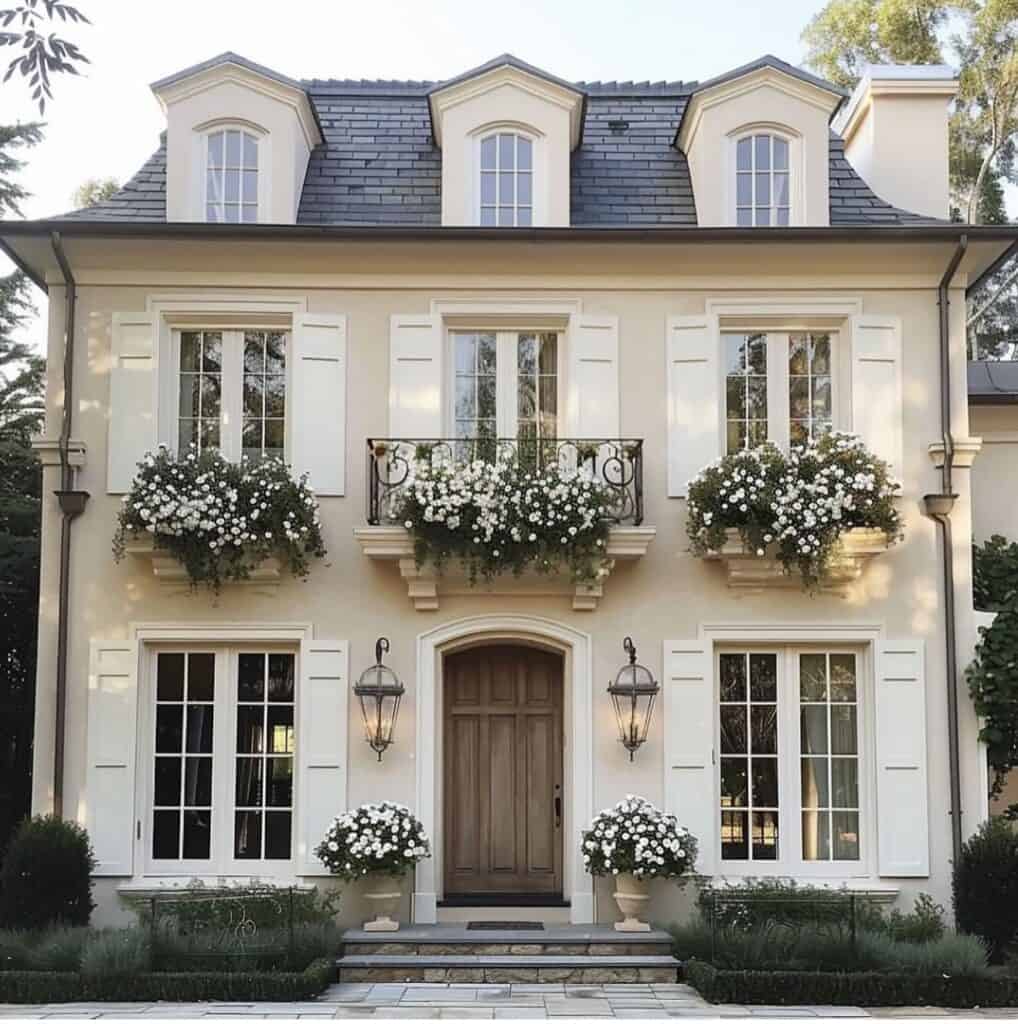
In this guide, we will explore the key architectural features that define French country exteriors, from weathered stone facades and colorful shutters to steeply pitched roofs and inviting courtyard gardens.
Let us break down exactly what makes these homes so undeniably picturesque.
>> Parisian Oasis: 17 Enchanting French Styled Bedrooms
The Timeless Appeal of Natural Stone Facades
The foundation of any classic French country exterior lies in its stonework. Unlike modern homes that often feature perfectly uniform brick or siding, traditional French homes rely on local, natural stone.
This stone features a rough, uneven texture that catches the light beautifully throughout the day.
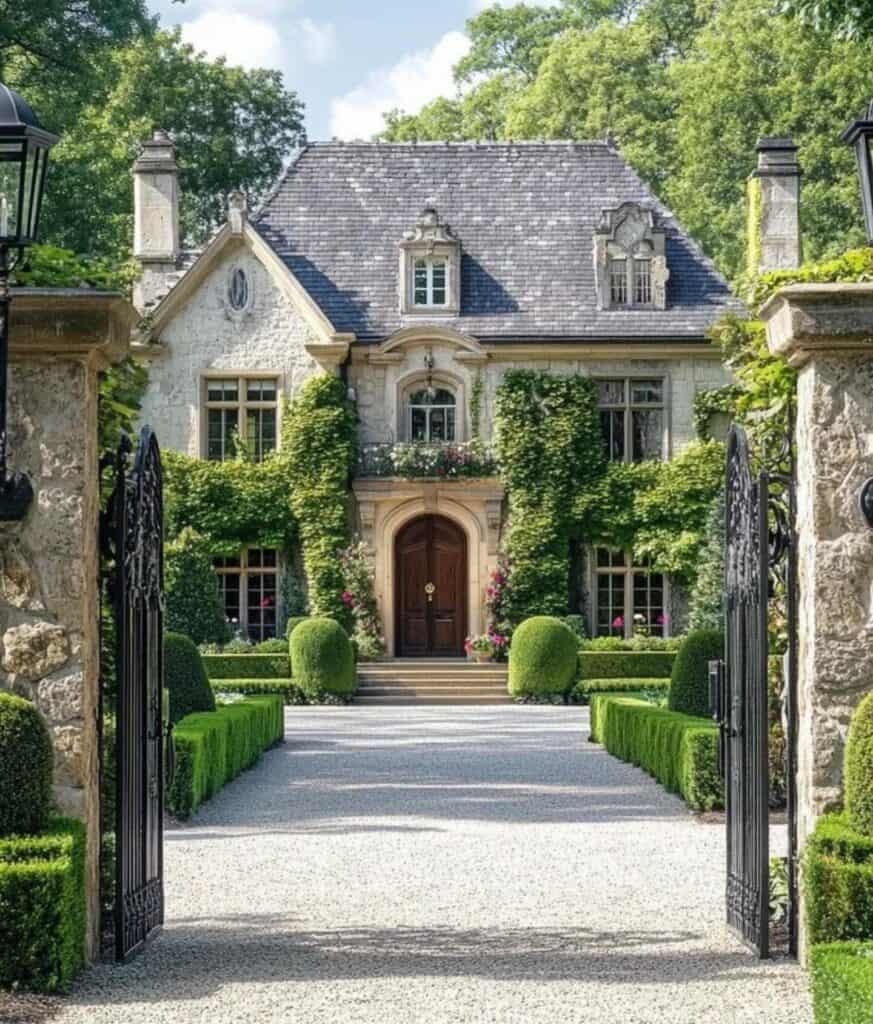
Builders historically used limestone or fieldstone sourced directly from the surrounding region. Because of this, the houses naturally mirror the colors of the earth they sit upon. You will often see a warm palette of honey yellows, soft creams, and muted grays.
Age only improves these facades. Centuries of sun, rain, and wind soften the edges of the stone. Patches of moss or creeping ivy often claim a corner of the wall, blurring the lines between the architecture and the garden. When you run your hand along the exterior, you can feel the history etched into every rough edge.
To replicate this look, seek out manufactured stone veneers with irregular shapes and warm, earthy undertones.
>> 18 Beautiful French Country Bathrooms for Your Home
Steeply Pitched Roofs Reaching for the Sky
Look up at a French country house, and you will immediately notice the dramatic roofline. These homes typically feature steeply pitched, hipped roofs. This design choice originally served a practical purpose, allowing heavy snow and rain to slide off easily during harsh European winters.
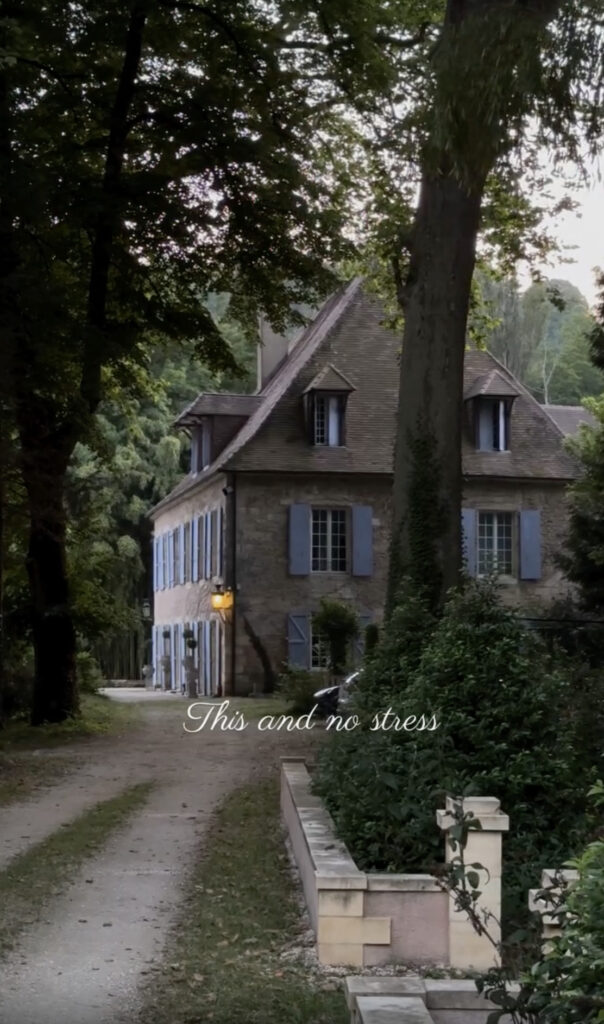
Today, those sweeping rooflines define the silhouette of the French country style. The roofing materials play a massive role in the overall aesthetic. In the northern regions of France, builders favor dark, natural slate tiles. The slate provides a sharp, elegant contrast to the light stone walls.
Move toward the sun-drenched southern regions like Provence, and the roofs change entirely. Here, you will find curved, terra-cotta clay tiles known as “barrel tiles.”
These tiles bake in the sun over decades, fading into a beautiful patchwork of burnt orange, soft peach, and faded brown. The overlapping tiles create deep shadows, adding wonderful texture to the top of the home.
>> 20 French Country Living Rooms That Blend Timeless Style and Comfort
The Charm of Provencal Shutters
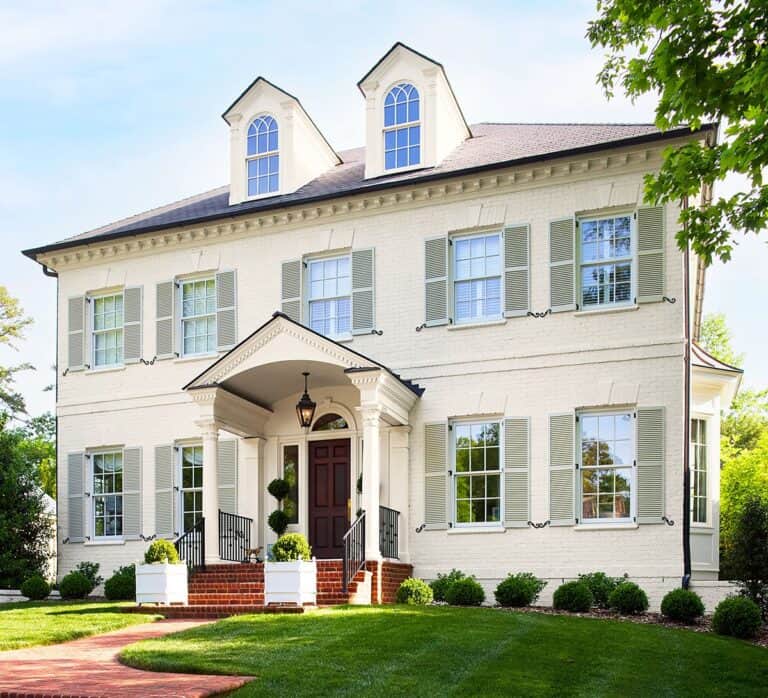
No French country exterior feels complete without a set of charming wooden shutters. Originally designed to protect homes from the intense summer heat and fierce mistral winds, these shutters now serve as one of the most beloved decorative elements of the style.
Board-and-batten shutters are the most common choice. These consist of vertical wooden boards held together by horizontal panels. They offer a wonderfully rustic, sturdy appearance.
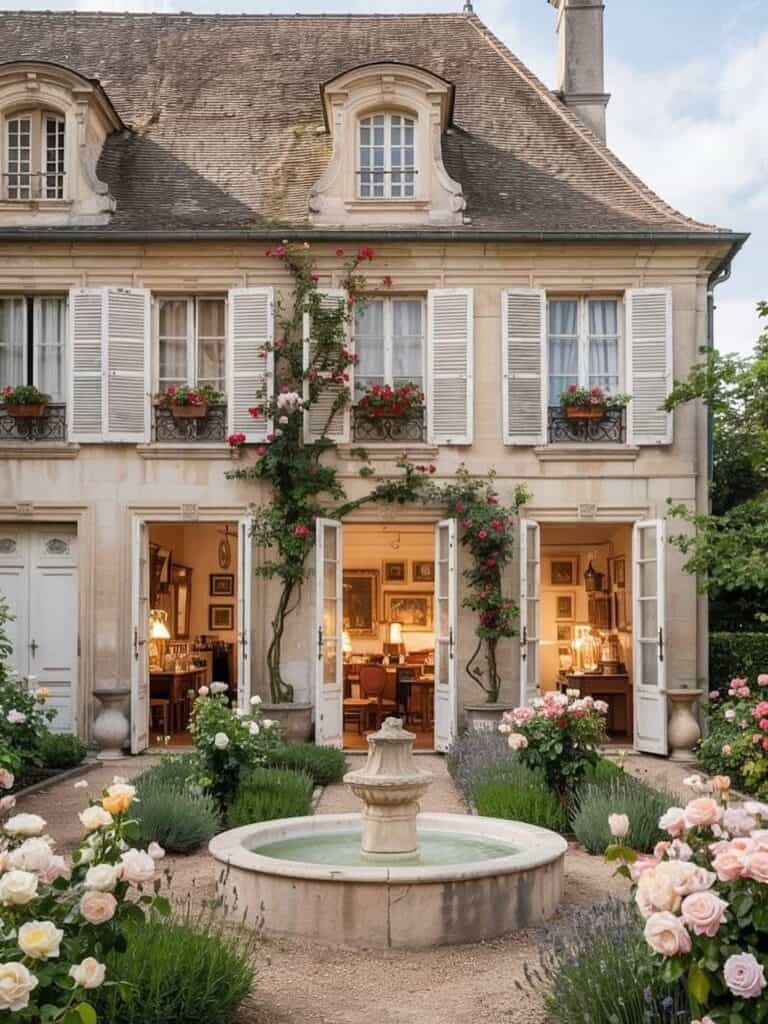
The true magic of French shutters lies in their color. While the stone facades remain neutral, the shutters provide an opportunity to introduce soft, nature-inspired hues. Classic choices include faded cornflower blue, sage green, and muted lavender.
The paint often appears slightly distressed or chipped, suggesting decades of quiet sun exposure. Traditional iron hardware, like S-shaped shutter dogs and heavy strap hinges, grounds the look and adds a touch of historical authenticity.
Welcoming Entrances and Wood Doors
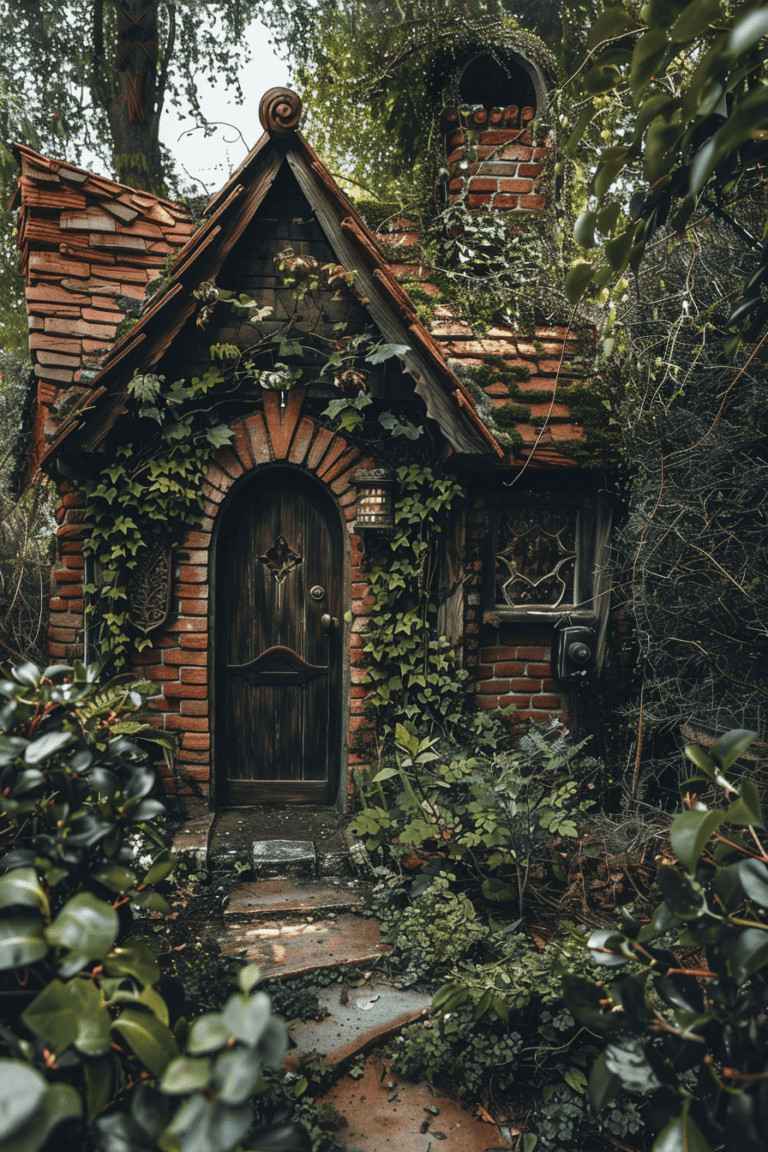
The front entrance of a French country house beckons you to step inside. The doorways often feature gentle arches, framed by intricate stone detailing known as a surround. This subtle curvature softens the heavy masonry of the facade.
The doors themselves are heavy and substantial. You will typically find solid wood doors made from rich, dark timbers like oak or walnut. Planks run vertically, sometimes studded with large iron nails or clavos.
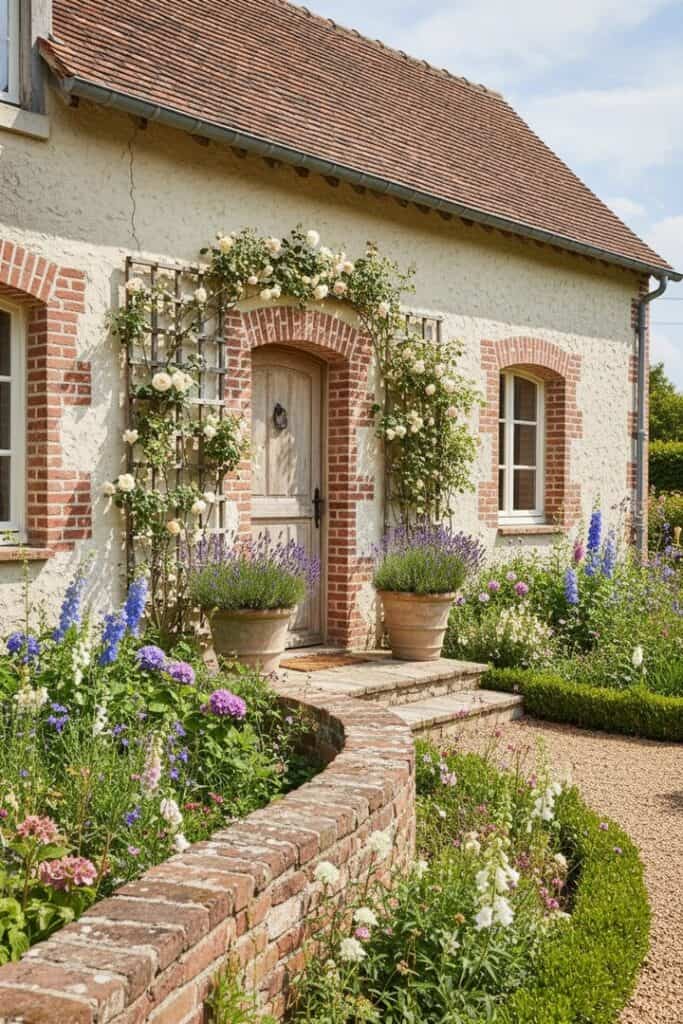
You will not find shiny brass hardware here. Instead, French country entrances favor wrought iron handles, heavy knocker rings, and oversized lock plates. A climbing climbing rose or a fragrant jasmine vine often frames the doorway, greeting guests with a burst of color and a sweet scent before they even cross the threshold.
Gardens That Blend With Nature
A French country exterior does not end at the walls of the house. The surrounding garden serves as a vital extension of the home. These outdoor spaces strike a delicate balance between cultivated beauty and wild, untamed nature.
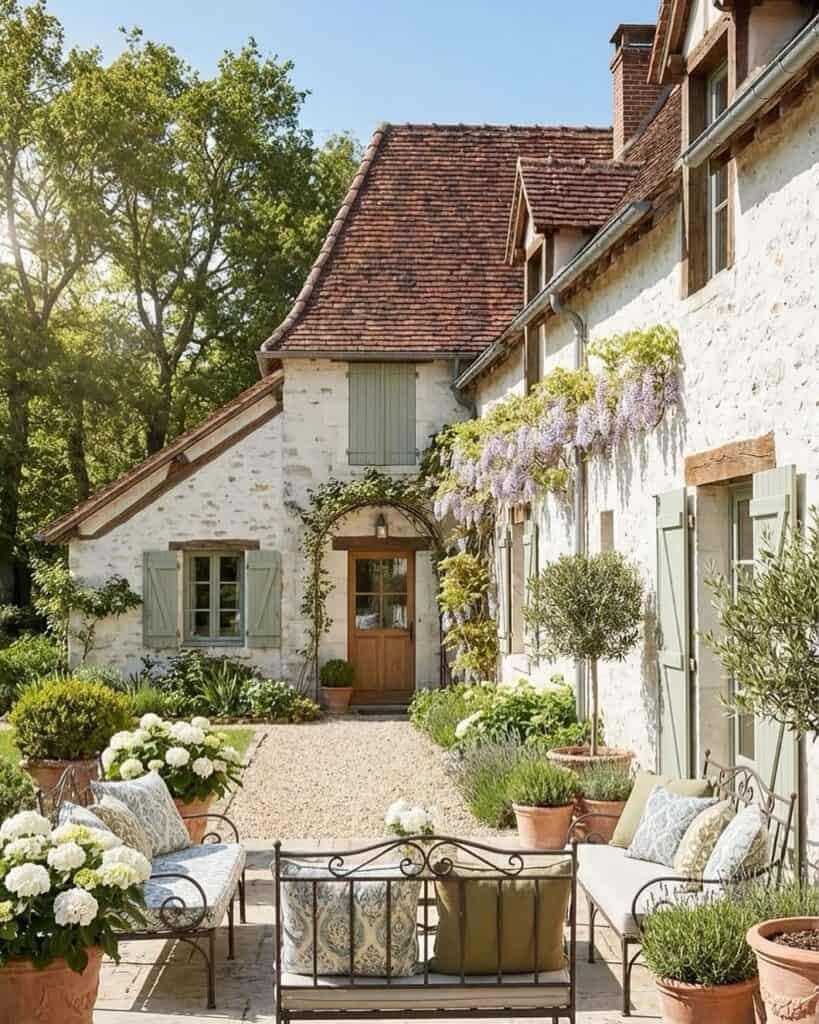
Courtyards and Gravel Pathways
Instead of perfectly manicured green lawns, French country homes often feature expansive gravel courtyards. The satisfying crunch of pea gravel underfoot is a hallmark of the style. These courtyards require very little water and provide a perfect, casual space for outdoor dining under the shade of an old tree.
Fragrant and Textural Plantings
The plant selection focuses on texture, scent, and muted colors. Rows of lavender and rosemary grow freely, releasing their oils into the warm air. Tall, slender cypress trees provide vertical interest, while lush olive trees offer silvery-green foliage that shimmers in the breeze.
Climbing Vines and Terra Cotta
To truly capture the look, you must blur the boundary between the house and the earth. Climbing vines like Boston ivy or wisteria scale the stone walls, anchoring the building to the landscape. Large, weathered terra cotta pots overflowing with bright geraniums or citrus trees often flank the front door and the courtyard edges.
Bringing French Country Style to Your Home
You do not need a centuries-old farmhouse in Provence to capture this enchanting aesthetic. You can incorporate several elements into your own home exterior right now to boost its curb appeal.
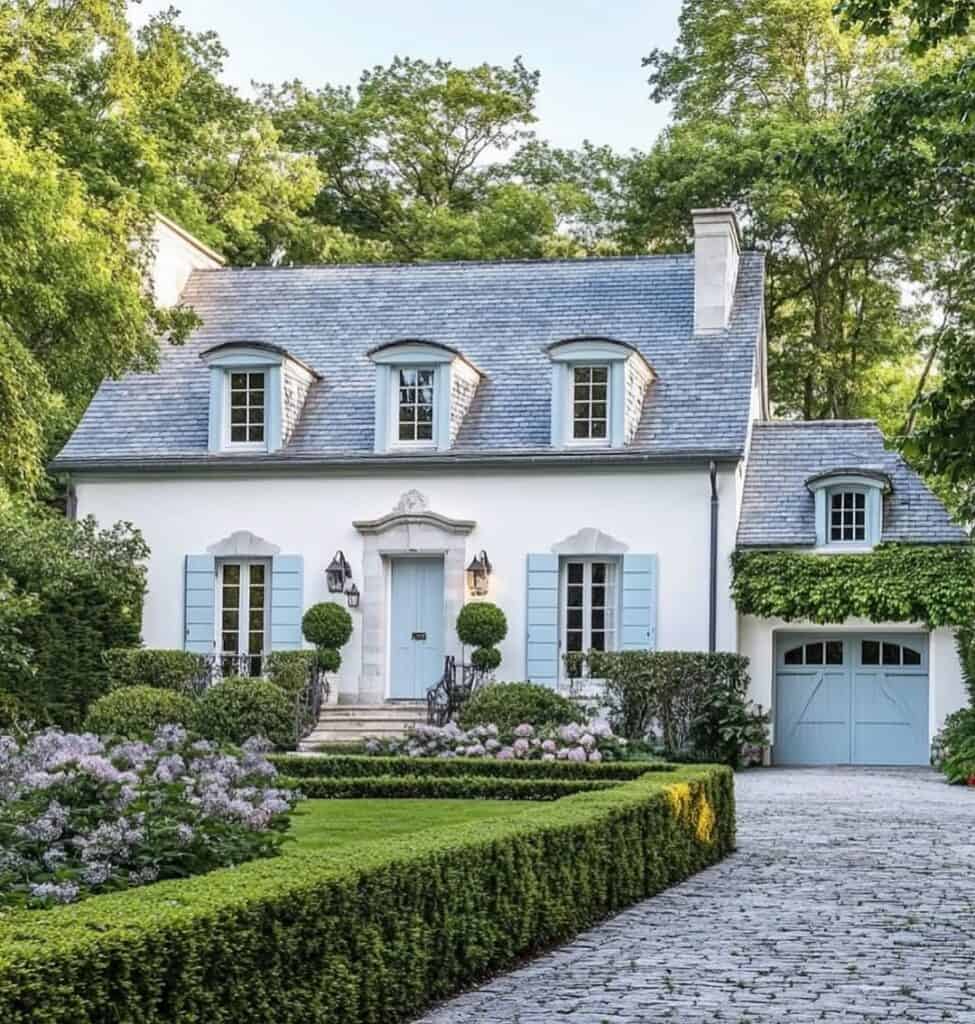
Start by updating your exterior color palette. Trade stark white paint for softer, creamier off-whites or warm taupe. If you have existing shutters, consider painting them a muted, chalky blue or soft green, and swap out basic hardware for rustic wrought iron pieces.
Focus on your landscaping next. Replace rigid, formal bushes with looser, more relaxed plantings. Introduce a large terra cotta planter filled with trailing vines near your entryway. If you are planning a larger renovation, consider adding stone veneer accents to your porch or swapping out a basic front door for an arched, solid wood alternative.
Your Next Steps Toward Rustic Romance
French country exteriors capture our hearts because they feel perfectly at peace with their surroundings. They celebrate natural materials, gentle colors, and the quiet beauty of aging gracefully. By focusing on textured stone, dramatic rooflines, colorful shutters, and fragrant gardens, you can weave this timeless romance into your own architectural plans.
Are you feeling inspired to transform your home’s curb appeal? Pin this guide to your favorite home design board to keep these rustic, elegant ideas right at your fingertips. Take a walk around your property today and identify one small area—perhaps the front door or a walkway—where you can add a touch of French country charm this weekend.